














By rethinking outmoded views on what a ‘school’ might be, we can reimagine the built environment as a landscape for learning – tailored to suit the myriad needs of a contemporary education.
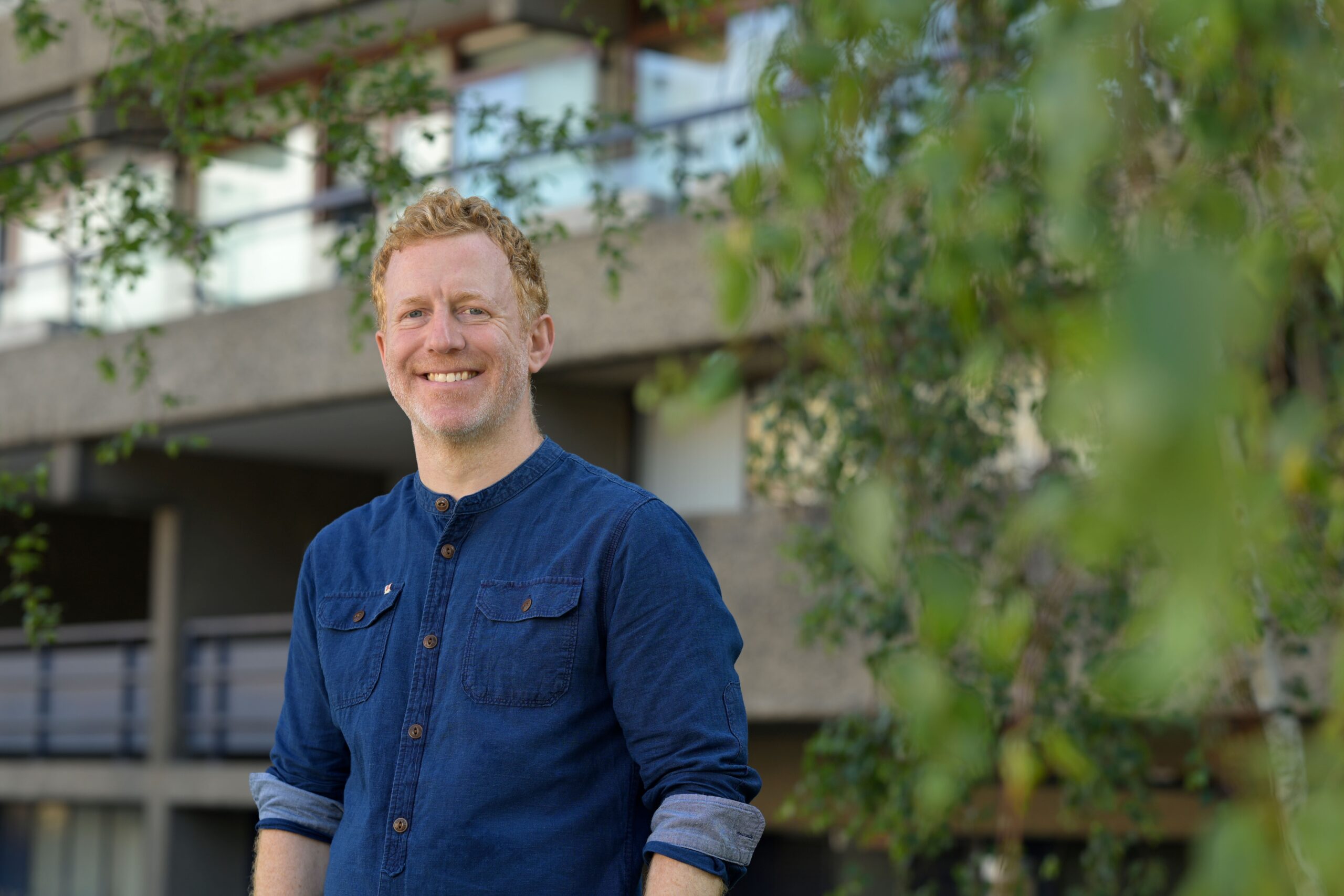
This article is written by John Edwards, director at e-gg
Across the country, underutilised buildings in towns, cities and rural communities offer significant opportunities for educational use. At the same time, falling pupil numbers, which are projected to continue over the next decade, and an increase in Education, Health and Care Plans (EHCPs) are reshaping demand in the sector. This is creating a more competitive market for schools whilst adding pressure to aging sites ill-equipped to address the climate catastrophe.
Creating learning environments with high standards of air quality and thermal comfort are essential to learning outcomes and staff retention but also for supporting health and wellbeing. Research from the Sensory Trust also espouses the benefits of regular engagement with nature in enhancing pupils’ development and educational experience.
Many schools lumber on, waiting for their ‘dream’ expansion, extension or new build to progress while wave after wave of pupils graduate from increasingly dilapidated estates.
But what if the solution was not a new-build but rather a rethink of the local building stock, acquiring instead a site with the potential to become a much-needed educational environment and being open and operational within two years of purchase? From former offices and care homes to civic buildings, community facilities and historic properties, these buildings which are no longer in use can provide a sustainable, cost-effective alternative to new construction.
The education sector is facing growing pressures on budgets, delivery timescales and environmental performance, and as such, the reuse of existing buildings is a viable option and one that in the past has been somewhat overshadowed by new build.
Reusing existing assets
A modern education should be tailored to suit the needs of learners. While, in the past, terms like ‘bespoke’ or ‘custom-made’ would have sent budgets into a spin, reuse offers schools, academies, trusts and independent providers looking to grow, shrink, merge or start afresh a shortcut to spaces that are unique and special by default.
Many buildings that are no longer used for their original purpose, have the key qualities needed to develop inspiring learning environments. For instance, there may be substantial indoor and outdoor space, buildings are likely to be of solid construction, and there is often a good source of natural light, as well as adaptable layouts – all of which are a good fit for an educational environment.
There are various examples of former commercial, residential and community buildings that have been successfully transformed, and what were once empty properties, are now thriving educational spaces that support not only students but the wider local communities too.
Chaldon School in Surrey, Ryefields School in Derby, and Wilden View School in Kidderminster, all part of the award-winning Aurora Group, are multi-million-pound Special Education Needs and Disabilities (SEND) developments that reused existing buildings.
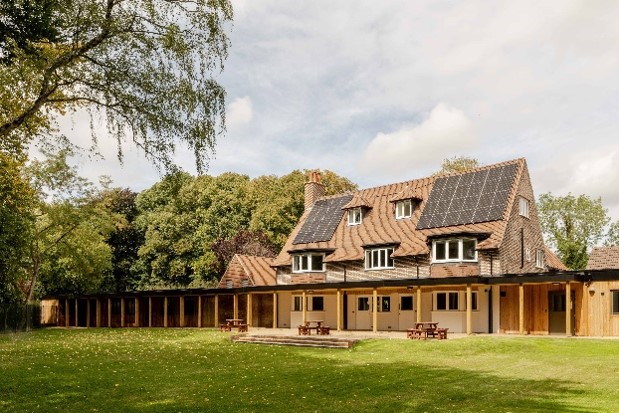
Image: Chaldon School in Surrey
At Chaldon School, e-gg’s specialist designs transformed an empty, dilapidated nursing home, sitting unused for more than six years within a mature Green Belt landscape, into a specialist secondary education provision for students with autism and associated social communication, sensory and emotional regulation difficulties. While for Ryefields, e-gg transformed a neglected 1970s brutalist building and former adult learning centre, into a school for children and young people with additional social, emotional and mental health needs.
A change of use, extension and new-build conversion of a Grade II listed country house led to the opening of Wilden View, a specialist independent school for young people. These projects are a small snapshot of what is possible, illustrating how architects that specialise in this area are able to successfully unlock the potential of existing buildings and give them a new lease of life as thriving educational environments. The potential is huge.
Regeneration through education
Educational development of this type can also act as a powerful catalyst for regeneration because by bringing schools and learning facilities into empty buildings, it protects the future of these assets and generates activity, employment and investment in surrounding areas.
Another important point is that buildings that may be difficult to redevelop for other uses, can be successfully repurposed for education, and this creates positive outcomes for both local communities and education providers. Furthermore, with demand rising sharply for SEND places, it also helps respond to changing educational needs.
Planning for success
Many of the most interesting sites are protected by heritage, Green Belt or other designations, which is often enough to dissuade potential investment. In the right hands however these constraints become opportunities and the potential difficulties that these might present when seeking statutory approvals can in fact be a cause for celebration.
Navigating planning constraints
There are however design challenges in following this route, but architects with the right expertise and skills can overcome potential issues and help achieve significant opportunities.
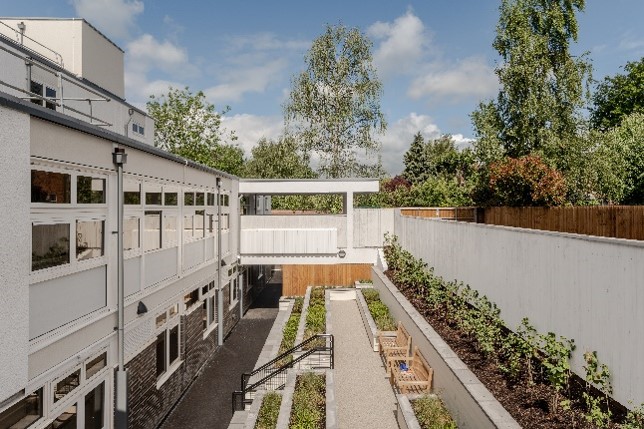
Image: Ryefields School in Derby
In practice, it’s worth bearing in mind that not every building is suitable for educational use, and this makes early assessment essential. Understanding a building’s structure, layout, condition and surrounding context helps establish whether a future project is both practical and economically viable – and for this reason, it’s recommended to undertake early feasibility studies to identify challenges and opportunities before significant investment is made. By evaluating buildings at an early stage, project teams can better understand how space can be reconfigured to support modern educational requirements while minimising unnecessary cost and programme risks.
A further point to consider, is that many of the most successful educational reuse projects involve buildings located within sensitive planning contexts such as Green Belt sites, Conservation Areas, or listed buildings. However, these constraints shouldn’t necessarily be seen as barriers because in many cases, the reuse of existing buildings aligns closely with planning objectives by preserving heritage assets, reducing environmental impact and bringing empty properties back into productive use.
The sustainability aspect
One of the strongest arguments for reusing existing buildings is sustainability and extending the lifespan of a building. New buildings carry a significant environmental cost before they are even occupied, however by retaining existing structures, projects can preserve substantial amounts of embodied carbon while also reducing demolition waste and the need for new construction materials.
There is also an opportunity to improve building performance with insulation upgrades, better ventilation, and improving heating systems and the building fabric.
A further aspect is that existing buildings often have qualities that cannot easily be recreated. They are often in mature landscapes with established trees and shrubs, and may have historic features or distinctive architectural character that can all contribute to a more engaging educational environment.
The connection between buildings and nature is particularly important in education, and again, existing sites can provide an opportunity to create outdoor classrooms, forest schools, social spaces, gardens and recreational areas that support mental health and wellbeing.
A valuable resource
There are countless empty buildings in the UK that could be transformed into inspiring learning environments, and are a valuable resource for the education sector.
As demand for educational provision continues to evolve, the industry must look beyond new construction and consider how existing assets can help meet future needs. Reusing empty buildings for educational projects is a quicker and more-cost effective way to create additional provision, whilst also supporting regeneration, reducing environmental impact and strengthening community connections.
Images: John Edwards and e-gg
Other features:
Why regenerative design is the next chapter for the built environment
Leave a Reply