















Following his win in the Makerfield by-election, experts explain why an Andy Burnham leadership could bring a more hands-on approach to planning and housing.
Over ten years ago, Andy Burnham twice ran unsuccessfully for the Labour leadership. Now, following Labour’s disappointing local election results in May, he is considered the strongest contender for the job.
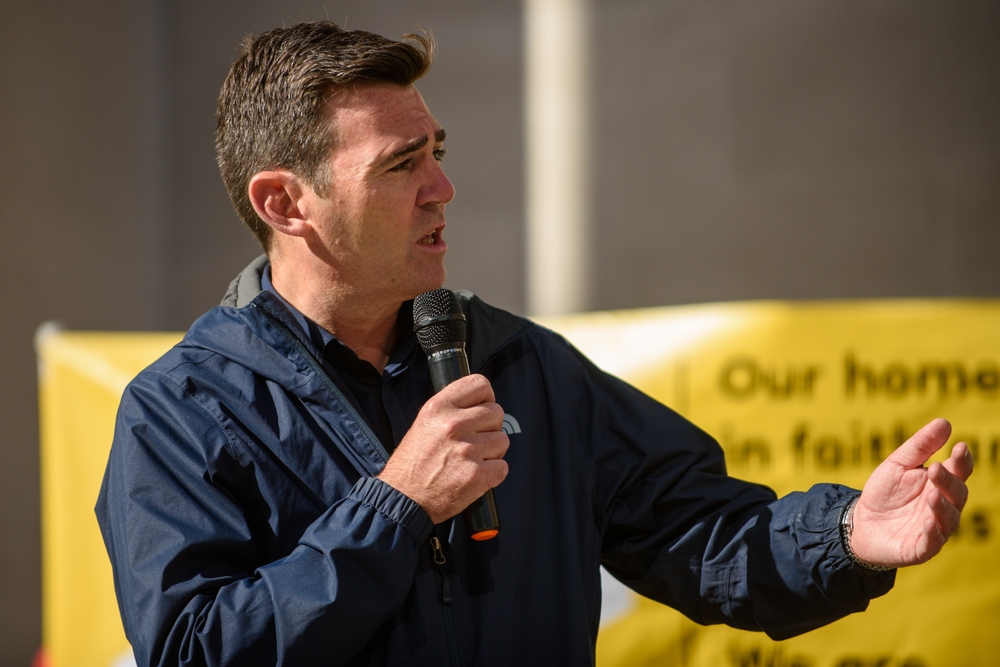
This morning (19 June), the former Greater Manchester Mayor was elected as Labour MP for Makerfield, securing 55% of the vote. Reform UK finished second, more than 9,000 votes behind.
Beyond the numbers, the victory removes a major barrier to any future leadership bid, as candidates must be sitting MPs to stand in a contest.
‘It is our last chance to change, but we’re going to take it, aren’t we? We are going to take that opportunity and we are going to lay out a new path for Britain,’ Burnham said, upon his victory.
‘We have an opportunity to turn the tide, to make the country feel like it’s working again, to make people see that politics can make a positive difference, to make people feel hope again.’
Since the news broke, dozens of people have begun sharing their views. Writing for Byline Times, Labour MP Clive Lewis said: ‘Andy Burnham won with a campaign focused on the ‘politics of place’ which didn’t much mention the Labour Party.’
He added: ‘Makerfield was not a victory. It was permission to fight.’
What does this mean for the property and development sector?
Although it is not certain Burnham will end up in Number 10, speculation about his prospects is growing, particularly in relation to his plans for the housing and planning sector.
Neil Louth, group executive director and CEO of the Acorn Group said: ‘Whether Andy Burnham becomes prime minister or not, the priorities are clear: build more homes, reform stamp duty, support aspiration and create the conditions for growth.
‘The country does not need political slogans; it needs practical leadership that delivers results. If we can increase housing supply, remove barriers to moving and restore confidence, the benefits will be felt across the economy.’
Research shows Labour is currently falling short of its manifesto pledge to build 1.5 million homes in England (30,000 annually), before the next parliament. Data shows annual build rates are sitting closer to 200,000, with stats dropping to their lowest levels in a decade.
Lawrence Turner, director of Boyer, said that if Andy Burnham became the prime minister ‘there is little doubt that housing delivery would still be a major priority, but the focus would shift towards what gets built and who benefits.’
‘Developers could find themselves working in a system where social rent, affordable homes, better public transport links and wider community benefits carry much more political weight when it comes to planning decisions, local plans and funding,’ Turner added.
‘Perhaps one of the biggest changes would be the continued transfer of power away from Whitehall and towards mayoral combined authorities and local government. For developers this increases the importance of understanding local and regional political priorities.
‘Planning decisions may increasingly be shaped by city region growth strategies, regeneration frameworks and transport investment, taking a stronger role in deciding where and how housing growth happens.’
Stepping away from planning decisions, Mark Chick, senior partner and head of the landlord and tenant department at Bishop & Sewell LLP, turns our attention to leasehold reform.
He states that while Burnham hasn’t said anything regarding leasehold reform during the by-election campaign, ‘it can be expected that were he to become prime minister the policy direction would remain on course.’
Chick said: ‘Some sector commentators have suggested that speeding up the process could give him a major positive in his first, crucial, 100 days, but that will depend on if and when he becomes PM, and where the legislation is in its timetable when that happens.
‘What isn’t in doubt is that housing is, and has been for a while, a priority for Burnham and during his time as mayor of Manchester he has implemented many significant policies – it is therefore likely that this priority will not change if he goes through the doors of number 10, and that the housing sector in the UK could be in for some significant changes over the coming years.’
Image: Shutterstock
In related news:
First phase complete on £55m Preston and South Ribble flood defences
Leave a Reply