















The Social and Affordable Homes Programme marks a shift back to council housebuilding, but delivery will depend on finance and strong partnerships, argues James Cogan, director at Boyer.

The launch of the £39bn Social and Affordable Homes Programme (SAHP) earlier this year, with at least 60% of homes earmarked for social rent, has put council housebuilding back at the heart of the national housing agenda. Four decades after direct council delivery almost completely ceased, the shift in direction is unmistakable.
The appetite amongst councils remains, with government figures showing local authorities delivered 10,480 affordable homes in England in 2024-25, amounting to 16% of all new affordable housing completions, and the highest share since the records began in 1991-92. While some councils are already returning to direct delivery, the question is whether the wider system is set up to let them accelerate it.
The constraints holding councils back are systemic rather than motivational. Councils have the land, the political will and a real desire to deliver more affordable homes. What they don’t have, however, is the financial firepower or the in-house skills to deliver on the scale that’s needed. This is not a criticism; rather, it’s just the reality of what decades of reduced investment and outsourcing affordable housing delivery have left behind.
It’s also worth recognising the longer history. Council housing has been sidelined, often stigmatised and pushed to the bottom of the housing agenda since the 1980s. This trend cannot simply be reversed by a single funding announcement; however, the additional funding comes at a time of renewed interest in direct delivery amongst councils.
Finance is more complicated than a single funding pot
While the £39bn commitment is hugely welcome, recent LGA analysis shows 44% of councils saying pressures on their Housing Revenue Accounts will limit the number of new homes they can deliver.
The councils I work with want to deliver more homes, but they’re operating under an incredibly difficult financial climate. Previous funding programmes haven’t been sufficient on their own, and those councils that have taken on risk in a turbulent market have often found themselves overexposed.
The capacity gap
The skills gap within councils is even more challenging to overcome. You can’t suddenly turn on the taps and expect councils to quickly upskill and scale up their development teams to unlock the levels of delivery needed. They don’t have the financial means to do so, and even if they did, the talent pool is not big enough. The capacity gap will therefore only be closed with the support of external partners.
The legacy issue that still shapes politics
There’s a subtler barrier, too. The popular image of council housing in much of the UK is still shaped by the system-built blocks of the late 1960s and 1970s, the poor-quality stock that left councils with long-term management and maintenance pressures. These poorly built and maintained homes led the public to question whether councils could be relied upon to provide good-quality, warm and secure homes for those in need.
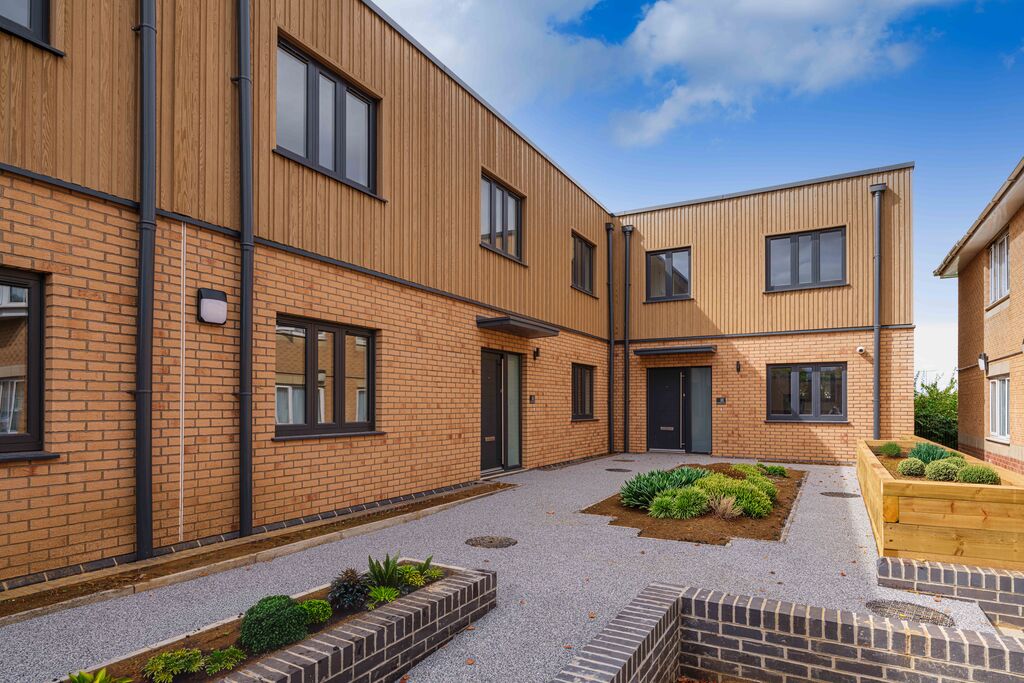
However, in reality, modern council homes are a world apart. All the schemes I’ve worked on have been high quality and increasingly built to standards that compare favourably with private developments. Yet public perception, not least amongst those who don’t require a council home, lags behind reality, leaving councils having to overcome public scepticism that private developers don’t face. This can often have direct consequences on the appetite of councils to expend political and financial capital to directly deliver new council homes.
Why partnership is doing more of the heavy lifting
The most consistent feature of the council programmes that are succeeding is effective partnership. I’ve seen it work well, but I have also seen what happens when it doesn’t.
Those councils that have tried to go it alone – sometimes with significant ambition and political backing – have often found themselves financially exposed when market conditions shift. In my experience, it is the councils that work closely with the private sector and housing associations that are most successful.
I am not, however, advocating councils simply outsourcing the delivery of council homes to the private sector or housing associations. The direct involvement of councils still brings things only they can offer; for example, land, local knowledge, accountability and the political mandate to prioritise social rent over private return. Effective partnerships let councils lean on private finance and delivery expertise. The partnerships that work best, in my experience, are the ones structured early, before the planning application, sometimes before the site is even acquired.
A generational opportunity
The new affordable housing programme represents the most serious commitment to social and affordable housing in a generation. The case for treating it as a moment to rebuild the capacity of councils to build homes, rather than just subsidising schemes through grant allocation, is overwhelming.
However, the additional funding is the easy part. Translating the £39bn into new council homes priced at social rent, in the right places – and at the right scale – depends on whether the wider conditions hold. Housing Revenue Accounts need strengthening; skills and capacity need long-term investment; and the case for partnership needs to be championed. If those things move together, the next decade can be the one in which council housing recovers its place in the national housing mix.
Images: James Cogan and Adrien Olichon/UnSplash
Other features:
Leave a Reply